Monitoring · Internal tool
PrintWatch, SNMP monitoring of a printer fleet
A tool built during the SAR internship: it monitors the printers over SNMP (supplies, status, faults), warns before stock-outs and helps assign GLPI tickets.
- 276 automated tests, run in continuous integration
- 3 roles read, write, admin, with an audit log
Screenshots
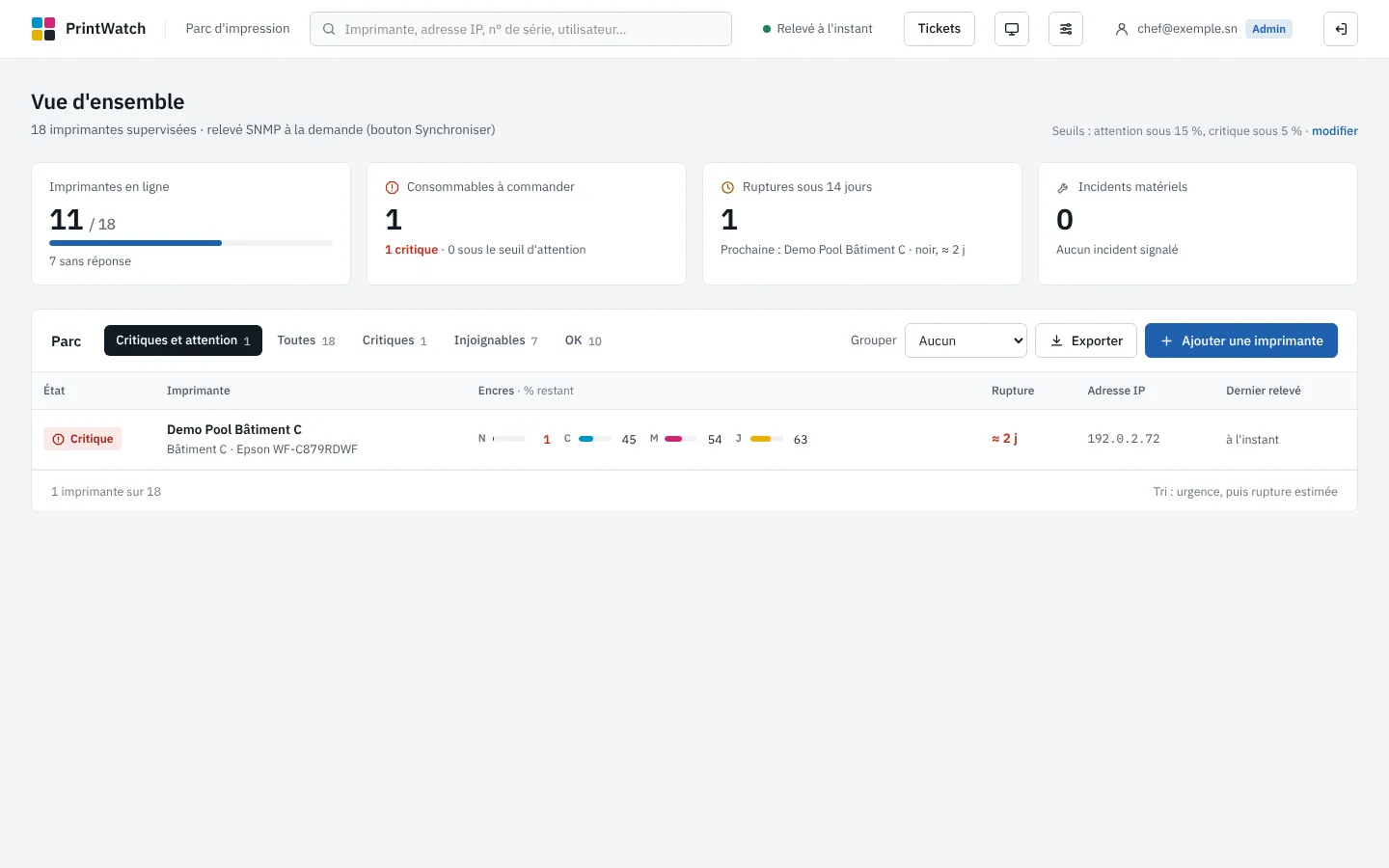
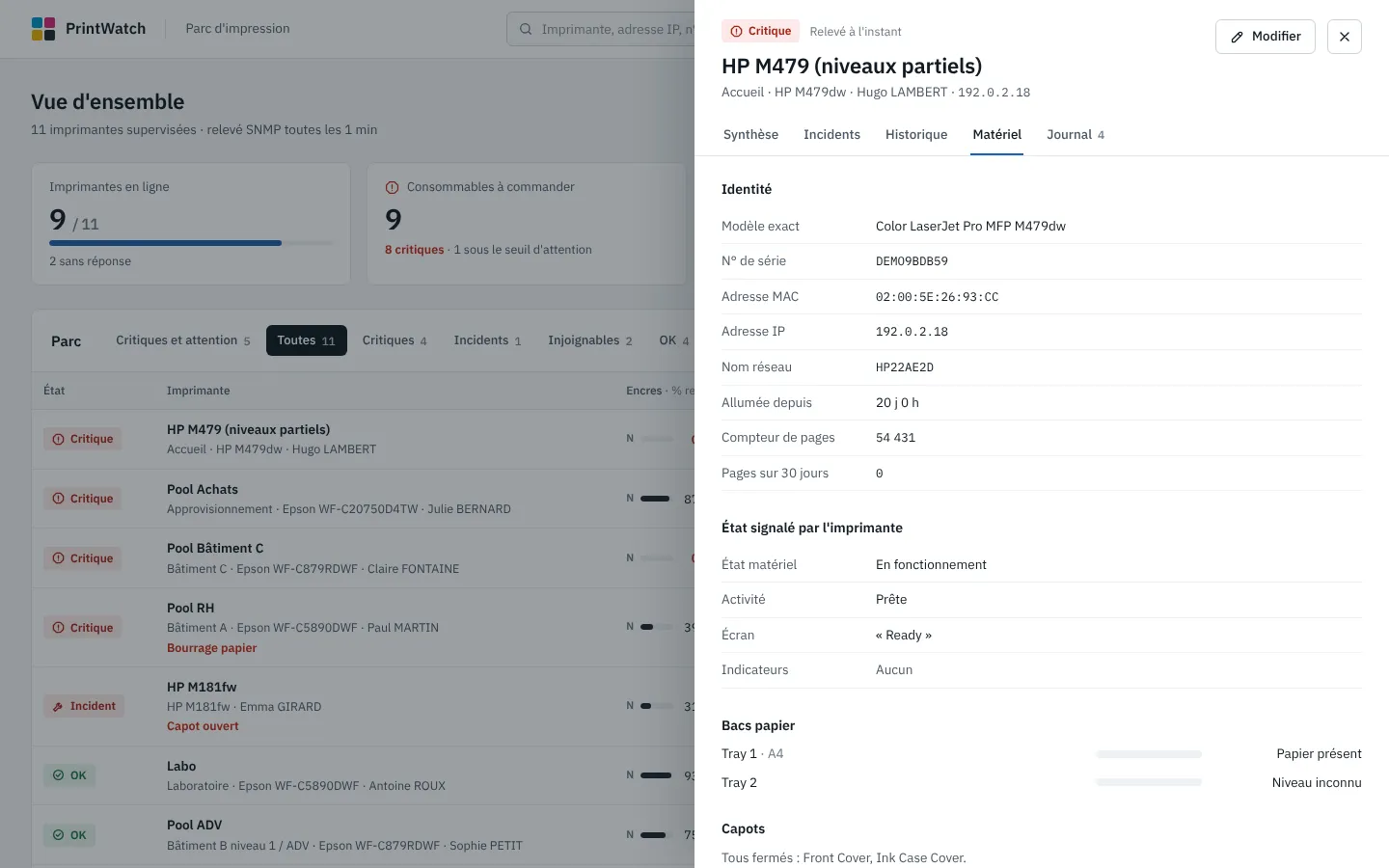
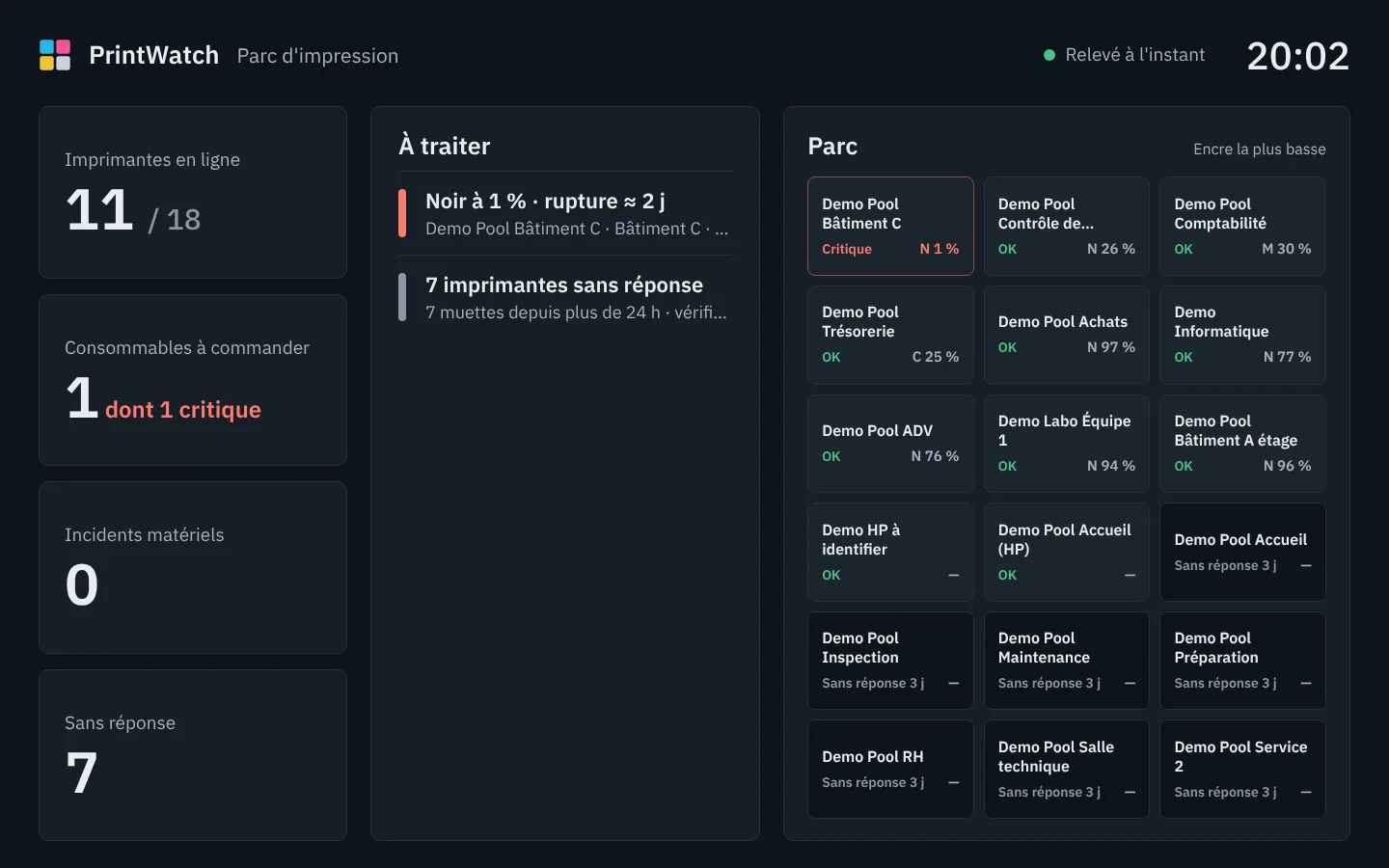
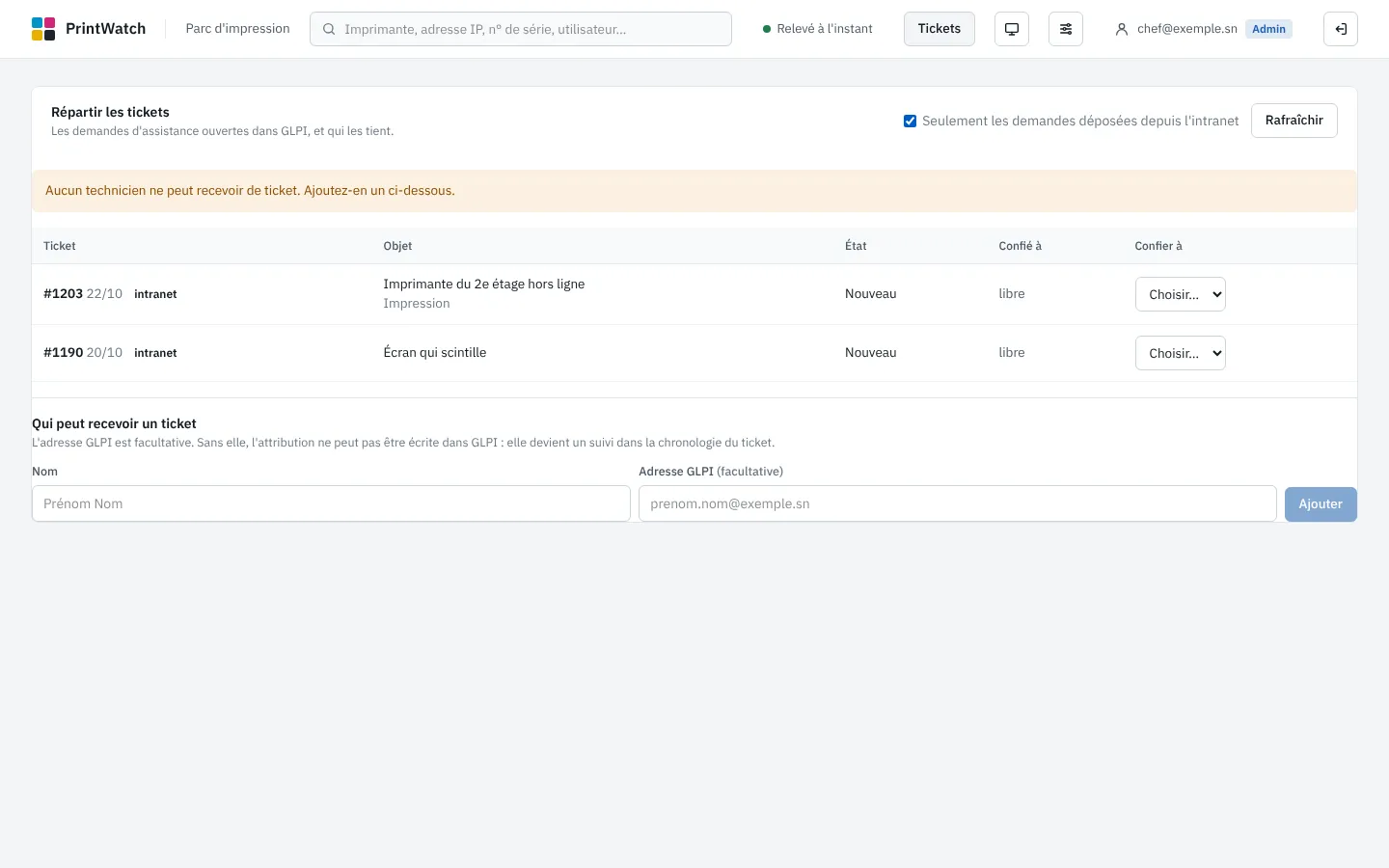
Real screenshots of the application, taken on fictitious data (demo mode). Source: the project’s GitHub repository.
What this project shows
The project covers the whole chain of an operations tool: network protocol, data, interface, security and enterprise deployment. Its documentation also lists its limits, for example SNMPv3 with AES encryption, not yet validated on real equipment.
Context, approach and architecture
Context
A fleet of network printers creates two kinds of requests for the IT department: supplies to order and faults to fix. PrintWatch polls each printer over SNMP, centralises the fleet status, flags what needs ordering or repair, then helps assign GLPI support tickets to technicians.
Approach
-
SNMP v1, v2c and v3 collection (Printer MIB, RFC 3805, and Host Resources MIB): supply levels, page counter, hardware status, jams, covers, trays; HP printers completed through their web interface (LEDM).
-
Alerts driven by a state machine with hysteresis, detection of replacements and unreachable printers, SMTP summary email and stock-out forecast by linear regression.
-
FastAPI and React/TypeScript dashboard: overview, hardware sheet per printer, wall display for the IT room, GLPI 11 ticket assignment (OAuth 2.0, API v2).
-
Security and operations: accounts and roles, scrypt passwords, signed cookie, CSP headers, audit log; 276 automated tests in continuous integration; deployment on Windows Server + IIS, systemd or Docker Compose.
Architecture
- SNMP / LEDM
- printer polling (UDP 161, HTTP for HP)
- Collecteur Python
- parallel polling, alerts, forecast
- SQLite (WAL)
- fleet, readings, events, incidents
- FastAPI + React
- JSON API and dashboard
- GLPI 11
- support tickets (OAuth 2.0)